Improving how users discover and interact with document extraction models
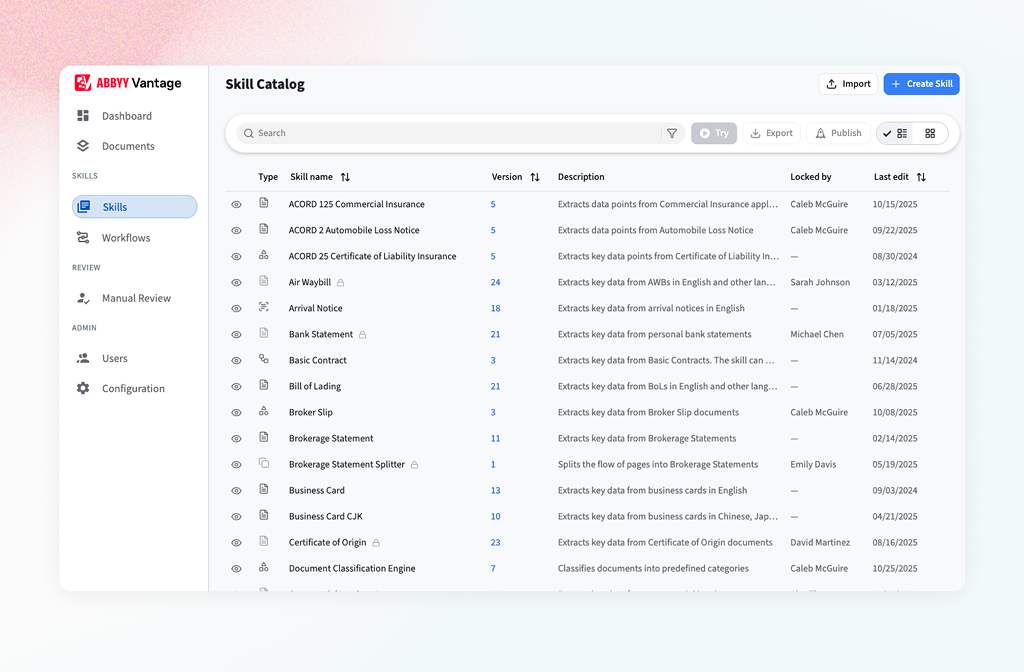
ABBYY’s Skill Catalog, a centralized library of reusable document extraction configurations, was the starting point for many document workflows. Service users relied on it to manage and configure extraction logic, but struggled to navigate, search, and quickly identify what was relevant to their tasks. I audited the existing experience, spoke with users, and designed focused usability improvements within the existing structure.
My role
- Conducted a focused UX audit of the Skill Catalog
- Initiated exploratory conversations with service users
- Used Figma Make and generative tools to simulate system states and conditional interactions at high fidelity
- Proposed usability improvements aligned with underlying system rules
Goal #1
Make it easier for users to find the right skill quickly
Goal #2
Improve clarity around relevance, status, and configuration context
Goal #3
Enhance usability without redesigning the system
Discovery & research
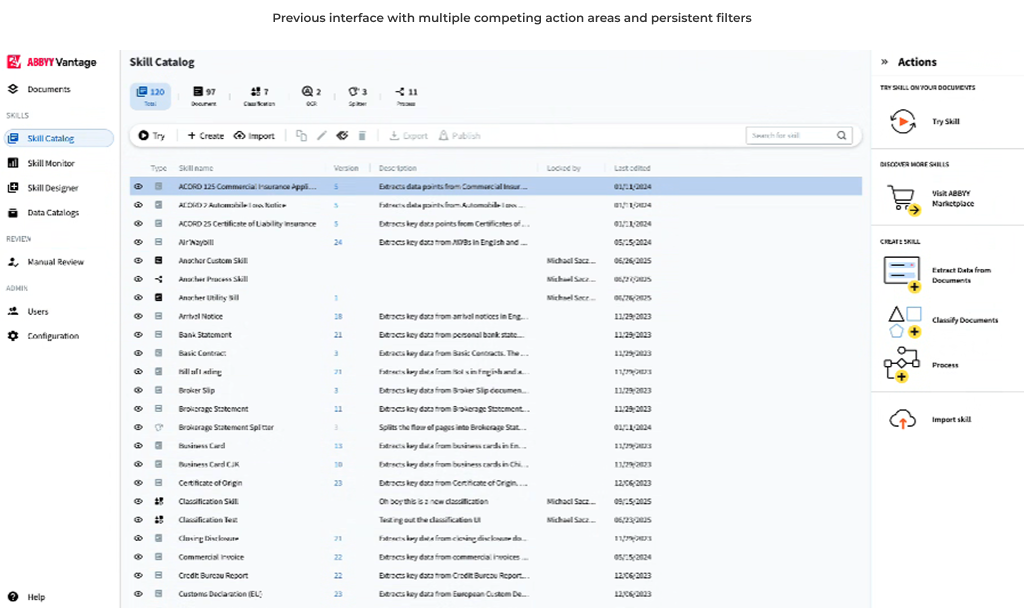
Service users spend significant time managing skills here. Interviews revealed friction in sorting, scanability, and differentiation between skill types. More importantly, actions were visible at all times regardless of context. Users could only create derived skills from certain skill types, but the UI did not communicate that constraint. A persistent Actions panel on the right and exposed category filters at the top created multiple competing action areas, increasing visual noise and ambiguity. The system logic was solid, but the interface did not reinforce it.
Sketching & exploration
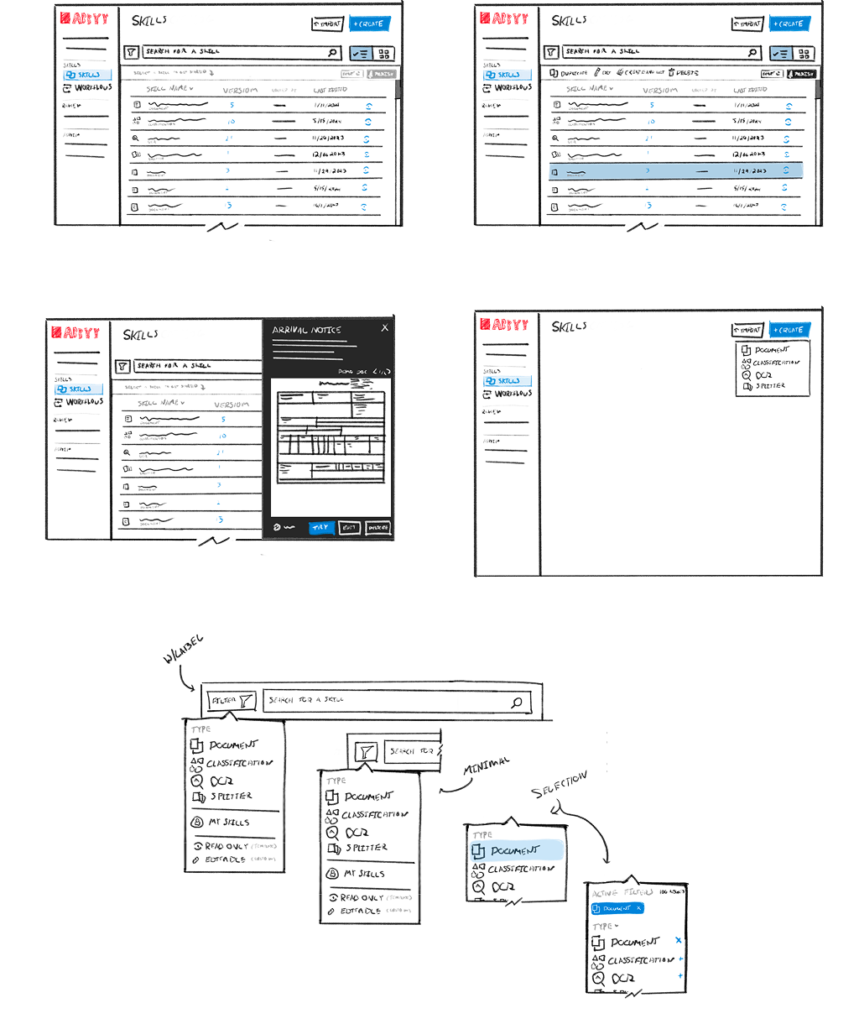
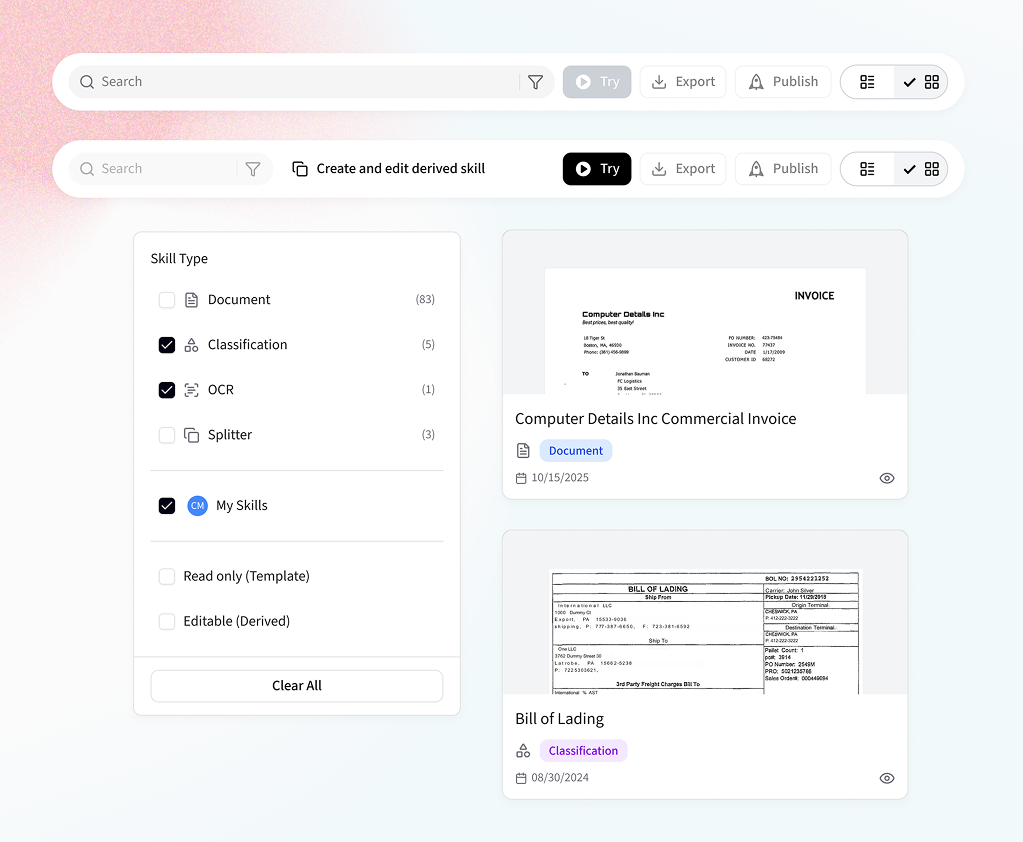
I focused on improving hierarchy, clarifying differentiation between skill types, and aligning visible actions with system rules. This included consolidating actions into contextual controls, removing the persistent side panel, and moving category filters into a compact, state-aware filter menu to reduce visual competition and cognitive load.
Reworking the interaction model
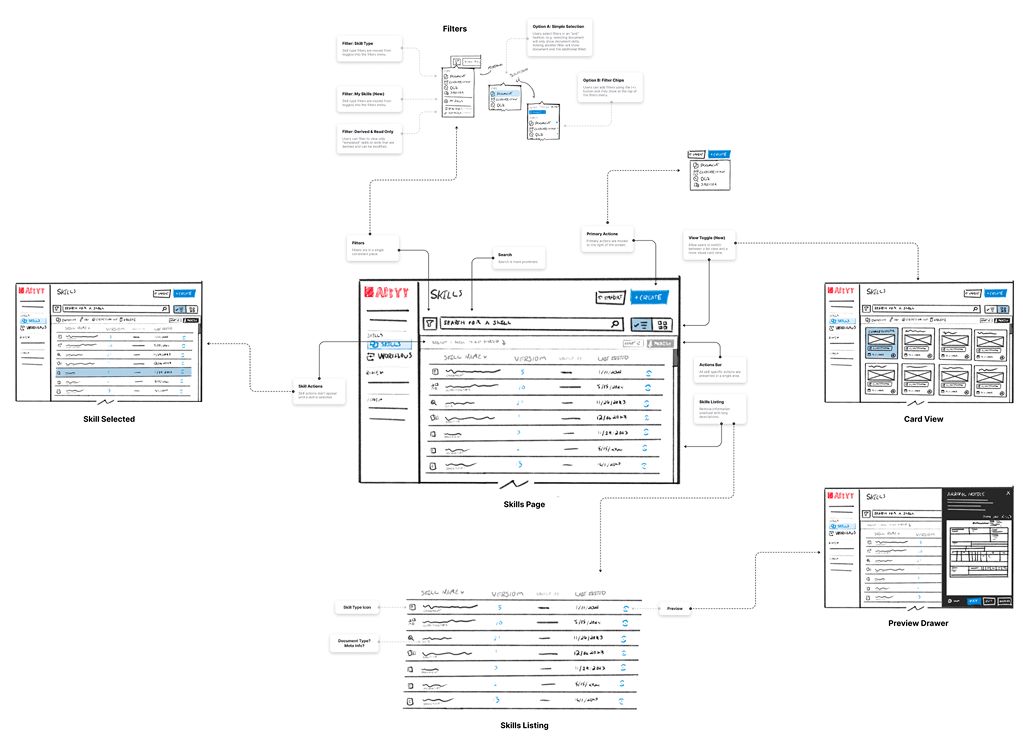
After identifying the friction, I stepped back to rethink the page structure and interaction model. I mapped primary actions, filtering behavior, selection states, and preview flows to clarify where responsibility lived in the interface. The goal was to reduce competing action zones and create a more coherent system where structure, hierarchy, and state were aligned.
Prototype development
I translated the exploration into a working interactive prototype in Figma Make that simulated search behavior, selection states, contextual preview, and conditional action visibility. Instead of displaying all actions at all times, the interface adapted based on selection. Actions like Create Derived Skill appeared only when valid, reinforcing system rules through behavior and reducing visual noise.
Outcomes & impact
The prototype clarified usability gaps and interaction inconsistencies within the Skill Catalog. It became a reference as we began modernizing the broader product experience, helping establish clearer patterns for navigation, metadata hierarchy, and contextual actions.